Neurofibromatosis is a group of genetic conditions that can cause tumours to grow along nerves and can also affect other parts of the body. The three related conditions discussed by Neurofibromatosis Ontario are NF1, NF2-related Schwannomatosis, and Schwannomatosis, and each can look very different from one person to another.
This information is educational and is not a substitute for advice from your healthcare team.
KEY TAKEAWAYS
- Neurofibromatosis is genetic, not contagious, and symptoms can vary widely even within the same family.
- NF1, NF2-related Schwannomatosis, and Schwannomatosis are related but distinct conditions with different typical features and monitoring needs.
- NF1 is much more common than the schwannomatosis conditions; published frequency estimates vary by study and diagnostic criteria.
- Early recognition helps families access appropriate medical follow-up and practical support sooner, without assuming every possible complication will occur.
- Ontario families can turn to Neurofibromatosis Ontario for plain-language information, peer connections, and help finding relevant resources.
What Neurofibromatosis Actually Is, In Plain Language
Neurofibromatosis is a genetic condition, meaning it begins with a change in a gene that affects how certain cells grow and function. It is best understood as a family of related disorders rather than a single, identical experience for everyone.
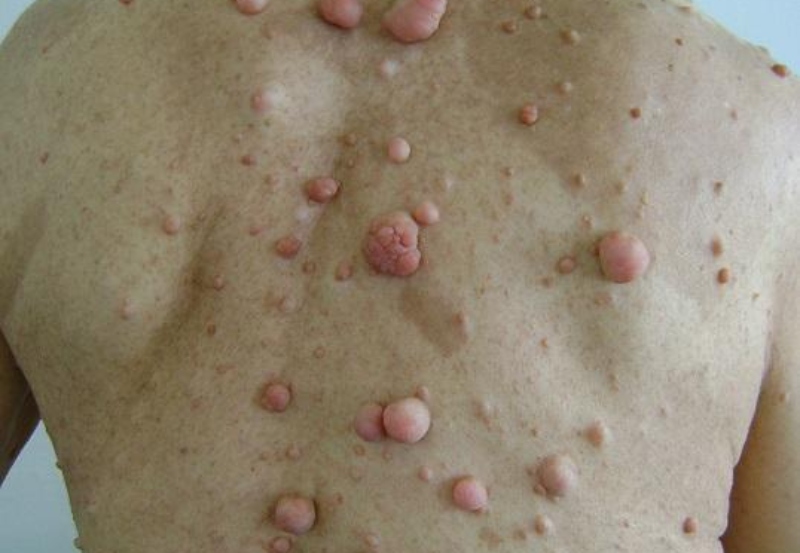
A common feature is the growth of tumours along nerves. Many of these tumours are benign, meaning they are not cancerous, but the conditions can involve more than tumours alone. Depending on the type, a person may also have skin changes, bone differences, learning or attention challenges, hearing or balance changes, vision concerns, pain, or other nervous-system effects.
The most important plain-language point is that there is no single “NF look.” One person may have mild findings and need routine monitoring, while another may need more specialized care. Even relatives with the same condition can be affected differently. That is why NFON emphasizes facts over fear and people-first language.
For a simple overview for families, see NFON’s What is Neurofibromatosis? page. A diagnosis should always come from qualified healthcare professionals, not from a photo, an online checklist, or a single isolated symptom.
Genetic does not always mean inherited. A person can have a disease-causing genetic change even when neither parent has the condition, because a new change can arise for the first time in that individual. This is one reason a family history can be helpful, but it is not required for an NF diagnosis. Genetic counselling can help families understand what a confirmed diagnosis may mean for relatives and future children. GeneReviews’ clinical summary of Neurofibromatosis 1 provides more detail on how these genetic changes arise.
The Three Related Conditions: Nf1, Nf2-Related Schwannomatosis, And Schwannomatosis
The three related conditions are connected to nerve-tumour biology, but they are not interchangeable terms for the same disorder. Knowing the specific diagnosis matters because the signs doctors watch for, the specialists involved, and the long-term monitoring plan can differ.
NF1: The most common form. It is linked to changes in the NF1 gene and often becomes noticeable in childhood. Features can include café au lait spots, freckling in certain areas, neurofibromas, specific bone or eye findings, and learning or attention differences. NFON has a dedicated Neurofibromatosis Type 1 resource page for families.
NF2-related Schwannomatosis: This is the current term for the condition formerly known as NF2. It is linked to the NF2 gene and is especially associated with vestibular schwannomas, which can affect hearing and balance, as well as other nervous-system tumours. Current expert nomenclature is summarized in GeneReviews.
Schwannomatosis: This related condition involves schwannomas growing on nerves and may be associated with chronic pain. Several genetic subtypes are now recognized, including SMARCB1-related and LZTR1-related schwannomatosis, so a genetics or specialist team may use more specific terminology after evaluation.
You can read more about Neurofibromatosis Type 1 on NFON. For the updated NF2 terminology, see the GeneReviews overview of NF2-related schwannomatosis. These distinctions are helpful, but families do not need to memorize every medical term before seeking help.
These conditions are not stages of a single disease. NF1 does not turn into NF2-related Schwannomatosis, and NF2-related Schwannomatosis does not progress to Schwannomatosis. Each diagnosis has its own genetic basis and clinical pattern. That distinction is especially important when a family is asking what should be monitored, whether relatives might need assessment, or which specialist should be involved.
How Common Neurofibromatosis Is
There is no single frequency for “neurofibromatosis” as a whole because the related conditions have very different prevalence rates and the terminology has changed over time. NF1 is by far the most common of the conditions discussed here.
Current medical references place NF1 in the low-thousands range: estimates vary by population and study, from roughly 1 in 2,000 to 1 in 4,000 people. A recent GeneReviews summary cites a Finnish population prevalence of about 1 in 2,052, while other widely used references report lower frequencies. The key point for families is that NF1 is uncommon, but it is not so rare that experienced specialty care and patient communities do not exist.
NF2-related Schwannomatosis is much rarer. GeneReviews estimates its prevalence at about 1 in 50,000, with a birth incidence around 1 in 28,000. Other forms of Schwannomatosis are rarer still, and estimates vary depending on the genetic subtype and how cases are identified.
Because numbers can change as diagnosis improves, it is more useful to treat prevalence as an estimate than as a fixed fact. For current clinical details, see the GeneReviews overview of NF1. If you are looking for Ontario-specific support, prevalence statistics matter less than finding the right next contact.
Why Early Recognition Matters
Early recognition matters because it can move a family from uncertainty to the right medical follow-up, not because every early sign predicts a serious outcome. Neurofibromatosis is highly variable, and a single feature alone is not enough to diagnose the condition.
For NF1, early clues may include multiple café-au-lait spots or other characteristic findings that prompt a clinician to look more closely. For NF2-related Schwannomatosis, hearing, balance, eye, or nerve-related findings may prompt further assessment. Schwannomatosis may come to attention because of schwannomas, pain, or other neurological symptoms. The exact pathway depends on age, symptoms, family history, and the suspected condition.
Recognition can lead to a more appropriate plan for monitoring, referrals, and vision or hearing checks when relevant, as well as support at school or work. It can also help families understand what does not require immediate worry. A good care plan is individualized: monitoring is based on the person’s diagnosis and clinical findings rather than on screening for every possible complication at once.
If you notice signs that concern you, bring them to your family doctor, pediatrician, geneticist, or another healthcare professional. Write down what you have noticed, when it started, and whether it has changed. Clear information helps the care team decide whether a referral or further testing is appropriate.
Where Ontario Families Can Turn For Support
Ontario families do not have to navigate a new Neurofibromatosis diagnosis alone. Neurofibromatosis Ontario is a volunteer-led organization that provides education, peer connections, and practical pathways to support for people living with Neurofibromatosis and their families.
NFON has supported the Ontario community since 1985. Its resources include plain-language information, support groups and peer connections, a member registry, Family Camp, educational materials, and links to medical professionals and clinics. The organization does not replace your healthcare team; it helps make the non-clinical aspect of navigating NF less isolating and easier to understand.
To see the full range of available support, visit NFON’s What We Do page. If you have just received a diagnosis, are waiting for an evaluation, or simply need to speak with someone who understands the Ontario context, reaching out can be a practical first step.
CONCLUSION
Neurofibromatosis is complex, but the first step does not have to be. Start with the specific diagnosis or question in front of you, use credible medical guidance, and remember that one person’s NF experience does not predict another’s. NFON’s goal is simple: no family faces Neurofibromatosis alone. If you need an Ontario-based next step, Get Support Now.
Frequently Asked Questions
Is neurofibromatosis the same as cancer?
No. Neurofibromatosis is a genetic condition, not cancer. Many tumours associated with NF are benign, meaning noncancerous. Some people with certain NF conditions do have an increased risk of specific cancers or malignant tumours, so appropriate monitoring matters. Your healthcare team can explain which risks apply to your specific diagnosis rather than to NF in general. For more on these risks, see GeneReviews’ clinical summaries of Neurofibromatosis 1 and NF2-related Schwannomatosis.
Is neurofibromatosis contagious?
No. Neurofibromatosis is not contagious and cannot be transmitted through touch, air, food, or close contact. It results from genetic changes. In some families, the genetic change is inherited from a parent; in others, it arises as a new genetic change with no previous family history.
Can neurofibromatosis be cured?
There is currently no single cure for Neurofibromatosis. Care focuses on monitoring and treating the specific features that affect each person, which may include surgery, medications, hearing or vision support, pain management, educational support, or other specialist treatment. Research continues, and treatment options are evolving.
Who is most likely to be affected by neurofibromatosis?
Neurofibromatosis can affect people of any sex and background. Some cases are inherited, while others result from a new genetic change in a person with no family history. The chance of passing a specific NF condition to a child depends on the exact diagnosis and genetic findings, so genetic counselling can be helpful for family-planning questions.