Neurofibromatosis diagnosis is usually based on a combination of medical history, physical findings, and, when useful, genetic testing or imaging. The exact evaluation depends on whether a clinician suspects NF1, NF2-related Schwannomatosis, or Schwannomatosis, as each condition has distinct diagnostic criteria and specialist tests.
This information is educational and is not a substitute for medical advice, diagnosis, or care from your healthcare team.
KEY TAKEAWAYS
- NF1 can often be diagnosed using internationally accepted clinical criteria; genetic testing can support a diagnosis but is not required in every case.
- NF2-related Schwannomatosis and Schwannomatosis use different diagnostic frameworks that rely more heavily on tumour type, imaging, family history, pathology, and molecular testing.
- MRI, eye examinations, hearing tests, and genetic testing are selected based on the question being investigated; there is no single universal test used for everyone.
- In Ontario, a family doctor or pediatrician may start the evaluation, while clinical genetics and other specialists often help confirm the diagnosis and plan follow-up.
- Bringing prior reports, a family history, a symptom timeline, and a written question list can make a diagnostic appointment more useful.
The diagnostic criteria physicians use for NF1.
Physicians diagnose NF1 by assessing a defined combination of clinical and genetic features. The 2021 international consensus criteria state that, for a person without a parent already diagnosed with NF1, two or more recognized criteria are generally required.
Those criteria include the following findings:
- Six or more café-au-lait macules, with size thresholds that differ before and after puberty.
- Freckling in the armpit or groin area.
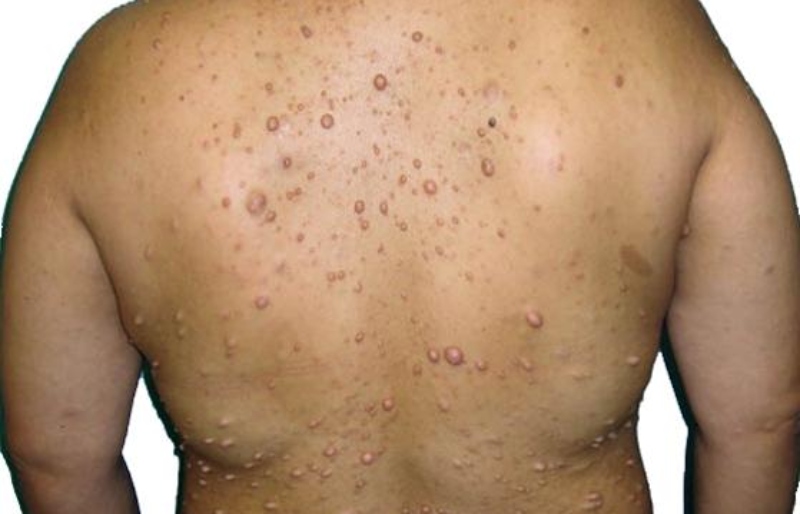
- Two or more neurofibromas, or a plexiform neurofibroma.
- An optic pathway glioma.
- Characteristic eye findings, such as two or more Lisch nodules or two or more choroidal abnormalities, identified through specialist eye examination or imaging.
- A characteristic bone finding, such as sphenoid wing dysplasia, specific long-bone bowing, or pseudarthrosis.
- A disease-causing change in the NF1 gene, called a pathogenic variant, identified in unaffected tissue such as blood.
If a parent meets NF1 diagnostic criteria, the revised framework can allow a child to be diagnosed with NF1 with one additional qualifying feature. The details matter: for example, pigmentary findings alone can overlap with other genetic conditions, so a genetics team may recommend molecular testing when the pattern is unclear.
A checklist is helpful for understanding what a clinician is looking for, but it is not a self-diagnosis tool. For a family-friendly overview of the condition itself, see NFON’s Neurofibromatosis Type 1 overview. Your healthcare team can interpret the criteria in the context of age, family history, and the full examination.
How NF2-related Schwannomatosis and Schwannomatosis are diagnosed differently
NF2-related Schwannomatosis and Schwannomatosis are not diagnosed with the NF1 checklist. Their diagnostic frameworks focus more on the type and location of schwannomas and other tumours, family history, imaging findings, and genetic results.
Under the 2022 international consensus update, NF2-related Schwannomatosis can be established by findings such as bilateral vestibular schwannomas, the same NF2 pathogenic variant in two separate related tumours, or specific combinations of major and minor criteria. Vestibular schwannomas are tumours that grow on the balance and hearing nerves, which is why hearing and balance assessments can be important.
Schwannomatosis is now understood as a group of related conditions rather than a single, uniform diagnosis. For some forms, such as LZTR1-related or SMARCB1-related Schwannomatosis, molecular testing and confirmation that a tumour is a schwannoma can be central to naming the specific subtype. Tumour testing may sometimes be needed because blood testing alone does not answer every question, particularly in mosaic disease, where a genetic change is present in only some cells.
For a plain-language introduction to the three related conditions, NFON provides a What is Neurofibromatosis? resource. The practical point is simple: a person being evaluated for NF1 may follow a very different diagnostic pathway than someone being evaluated for NF2-related Schwannomatosis or another form of Schwannomatosis.
What tests and imaging are typically involved
Tests and imaging are selected to answer a specific clinical question; there is no single universal neurofibromatosis test that everyone receives. Some people can meet NF1 criteria based on history and physical examination alone, while others require additional testing to clarify the diagnosis or investigate a particular symptom.
- Physical and neurologic examination: clinicians assess skin findings, growth, bones, neurologic function, and the overall pattern of signs and symptoms.
- Eye examination: an ophthalmologist may look for Lisch nodules, choroidal abnormalities, optic pathway abnormalities, or other eye findings relevant to the suspected condition.
- MRI: magnetic resonance imaging may be used to evaluate the brain, spine, hearing and balance nerves, or a specific painful or changing area. MRI is not automatically required to diagnose NF1 in every person.
- Hearing and balance testing: audiology is particularly relevant when NF2-related Schwannomatosis is suspected because vestibular schwannomas can affect hearing and balance.
- Genetic testing: a blood or saliva sample can be used to look for a disease-causing variant in NF1, NF2, LZTR1, SMARCB1, or other relevant genes. In some Schwannomatosis evaluations, testing tumour tissue can provide information that a blood test cannot.
- Pathology: if a tumour has been removed, a pathologist may confirm the tumour type, which can be important when applying the Schwannomatosis criteria.
A negative genetic test does not automatically rule out NF1 when the clinical picture is convincing, and an imaging finding by itself does not always establish an NF diagnosis. The care team combines the pieces rather than treating one result as the whole answer.
Who diagnoses neurofibromatosis in Ontario?
In Ontario, neurofibromatosis may first be recognized by a family doctor or pediatrician, but confirmation and ongoing care often involve a clinical genetics team or specialist. The right referral depends on the suspected condition, the person’s age, and the findings that prompted the evaluation.
Clinical geneticists and genetic counsellors commonly assist with diagnostic criteria, genetic testing, inheritance questions, and family planning. Depending on the situation, the team may also include specialists in neurology or neurosurgery, dermatology, ophthalmology, audiology, otolaryngology, orthopedics, oncology, pain, or other services. Not everyone needs every specialist.
Neurofibromatosis Ontario does not diagnose medical conditions, but it networks with physicians and clinics and helps families find information and connections across the province. You can view the organization’s support pathways on NFON’s What We Do page and learn more about its Ontario-based work since 1985.
If your family doctor is unsure where to refer, ask specifically whether clinical genetics, an NF-experienced clinic, or the specialist associated with the main symptom would be the best next step. A referral question that clearly names the concern can make the pathway easier to navigate.
What to bring to a diagnostic appointment
Bring whatever helps the clinician see the full pattern over time. You do not need a perfect file or a complete family tree to be assessed, but a few organized details can reduce repetition and make the appointment more productive.
- Previous medical reports, including imaging, eye examinations, hearing tests, pathology, or genetic test results, if you have them.
- A brief symptom timeline: what you noticed, when it started, whether it changed, and what has already been checked.
- Clear photos of skin findings or visible changes taken over time, especially if they are difficult to see on the appointment day.
- Family history you know about, including relatives with Neurofibromatosis, schwannomas, multiple nerve tumours, early hearing loss, or similar findings. It is fine to say when you do not know.
- A medication list and notes on other health conditions, surgeries, or specialists already involved.
- For a child, relevant developmental, school, vision, or hearing information, if those areas are part of the concern.
- A written list of questions. Put the two or three questions that matter most at the top so they are answered even if the visit is busy.
It can also help to ask what the clinician is trying to decide during this visit. Are they confirming a diagnosis, determining whether genetic testing is useful, arranging surveillance, or referring you to another specialist? Knowing the purpose of each step can make a long evaluation feel more manageable.
FREQUENTLY ASKED QUESTIONS
Can a family doctor diagnose neurofibromatosis?
Sometimes. A family doctor or pediatrician can recognize characteristic findings, document family history, and may be able to determine whether clinical criteria are met, especially for NF1. Because the diagnosis affects monitoring and family counselling, many people are referred to clinical genetics or an NF-experienced specialist for confirmation, complex cases, or testing. Suspected NF2-related Schwannomatosis or Schwannomatosis usually requires additional specialist input.
Is genetic testing required for an NF diagnosis?
No, not always. NF1 can often be diagnosed using clinical criteria, and a pathogenic NF1 variant is one possible criterion rather than a universal requirement. Genetic testing can be especially helpful in young children with incomplete findings, unusual or segmental presentations, or when another condition could look similar. Molecular testing often plays a larger role in NF2-related Schwannomatosis and gene-related Schwannomatosis.
How long does it typically take to get a diagnosis?
It varies. Some people meet clear diagnostic criteria at the first specialist evaluation, while others require follow-up because certain features develop with age or because genetic or imaging results take time to emerge. Referral wait times also vary across Ontario. Ask what can be concluded now, what tests are pending, and which new findings should bring you back sooner rather than waiting for the next routine visit.
What specialists are usually involved in diagnosing NF?
Clinical genetics is commonly involved, but the team depends on the suspected condition and symptoms. A pediatrician or neurologist may coordinate care; ophthalmology can assess characteristic eye findings; endocrinology is also an important part of care, particularly when hormonal or endocrine complications are suspected; audiology and ear, nose, and throat specialists are important when hearing or balance is affected; and surgeons, orthopedists, dermatologists, or other specialists may contribute when a particular tumour or complication requires assessment.
CONCLUSION
A neurofibromatosis evaluation is a structured process, not one universal test. The goal is to match the right criteria and investigations to the specific condition a clinician suspects, while avoiding unnecessary testing. If you are waiting for answers, keep your records together, write down your questions, and remember that your family does not have to navigate the process alone. For an Ontario-based next step, Get Support Now.