
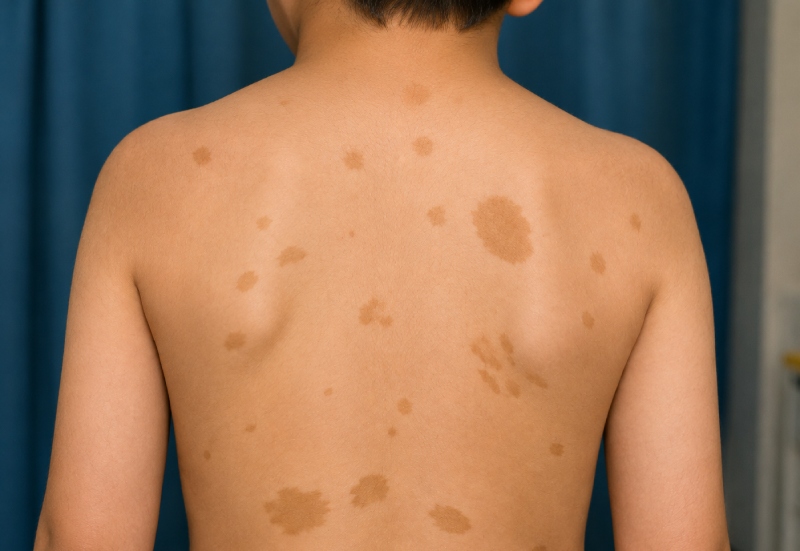
Neurofibromatosis type 1 and neurofibromatosis type 2 are two genetic disorders that lead to tumours in the nerves, yet they affect the body differently. The differences between neurofibromatosis type 1 and type 2 include symptoms, age of onset, and which nerves or organs are most affected. Knowledge of these differences can help parents recognize symptoms and seek appropriate support and care.
Key Takeaways:
- Neurofibromatosis Type 1 and Type 2 are different genetic conditions with distinct symptoms and complications.
- Neurofibromatosis type 1 symptoms in children often include café-au-lait spots, skin tumours, and learning differences.
- Neurofibromatosis type 2 symptoms commonly include hearing loss, tinnitus, and balance problems.
- Is neurofibromatosis genetic? Yes — about half of the cases are inherited, while others happen through new genetic changes.
- Early diagnosis, regular monitoring, and community support can help families manage Neurofibromatosis more confidently.
What Is the Difference Between Neurofibromatosis Type 1 and Neurofibromatosis Type 2?
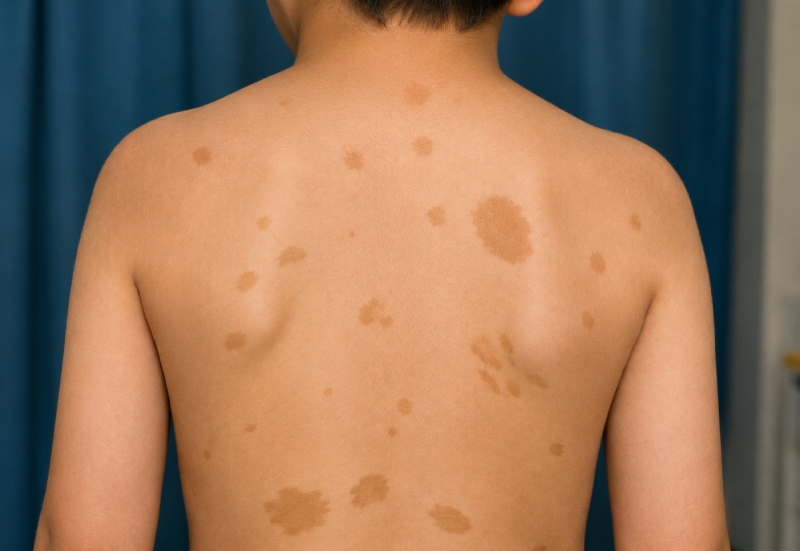
The difference between neurofibromatosis type 1 and type 2 is largely in terms of which nerves it affects and at what age the symptoms tend to manifest. Neurofibromatosis type 1 and neurofibromatosis type 2 also differ in how common each condition is and the types of tumours involved. NF1 accounts for approximately 96% of all neurofibromatosis cases, while NF2 accounts for about 3% of cases (StatPearls).
Neurofibromatosis is a set of genetic disorders that cause tumours to develop along nerves throughout the body. NF affects about 1 in 2,500 people.
Neurofibromatosis Type 1 (NF1)
Neurofibromatosis type 1 is the most common form. It is caused by a mutation in the NF1 gene on chromosome 17.
Common signs include:
- Café-au-lait spots
- Freckling in the armpits or groin
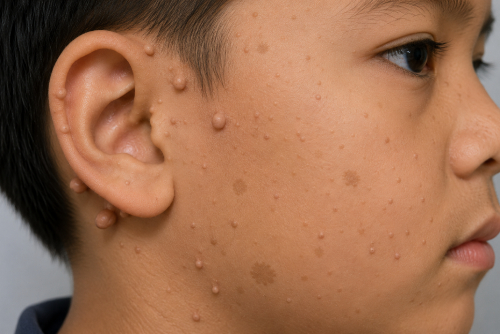
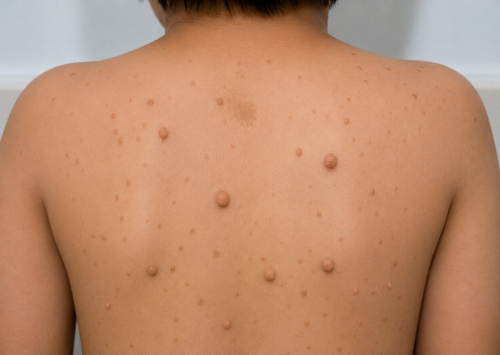
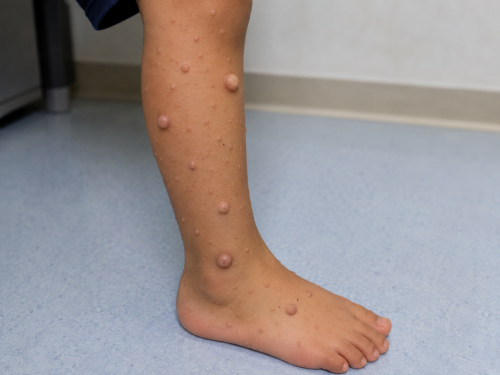
- Neurofibromas (benign nerve tumours)
- Learning or attention differences
- Vision problems linked to optic gliomas
Neurofibromatosis Type 2 (NF2-Related Schwannomatosis)
Neurofibromatosis Type 2-related schwannomatosis is less common and typically manifests in the teen or adult years. It primarily affects the nerves of hearing and balance.
Common neurofibromatosis type 2 symptoms include:
- Hearing loss
- Ringing in the ears (tinnitus)
- Balance problems
- Tumours on the hearing nerves
What Are the Symptoms of Neurofibromatosis Type 1 and Type 2?
Parents who may be seeking signs of neurofibromatosis type 1 or type 2 in a child usually want to know what to look for.
Symptoms of Neurofibromatosis Type 1 in Children
NF1 can present with symptoms at a young age in many children. Some complaints are mild, whereas others may require medical attention.
Common symptoms include:
- Light brown skin patches called café-au-lait spots
- Small lumps under or on the skin
- Learning or attention difficulties
- Bone changes, such as scoliosis
- Vision problems caused by optic gliomas
NF1-related tumours are mostly benign, meaning they are not cancerous. Nevertheless, it is essential to monitor them, as the tumours may still affect nerves, organs, and mobility.
Neurofibromatosis Type 2 Symptoms
Neurofibromatosis type 2 symptoms are usually related to hearing and nerve function.
Parents and caregivers need to be alert to:
- Hearing changes
- Frequent dizziness
- Balance problems
- Headaches
- Facial weakness
Red Flags Parents Should Not Ignore
Parents should contact a healthcare provider if they notice any of the following:
- Rapid tumour growth
- Persistent pain
- Weakness or numbness
- Vision changes
- Trouble walking or frequent falls
Is Neurofibromatosis Genetic and Can Parents Pass It On?
The answer is yes. Neurofibromatosis is caused by changes (mutations) in specific genes that normally control cell growth.
How Neurofibromatosis Is Inherited
Approximately half of individuals with Neurofibromatosis inherit the disease from one of their parents, whereas the other half acquire it due to a new genetic mutation.
Half of the children born to a parent with Neurofibromatosis are likely to inherit the condition. According to GeneReviews, about 50% of NF1 and NF2 cases are inherited from a parent, while the other half arise from spontaneous (de novo) mutations.
Can Neurofibromatosis Skip a Generation?
Neurofibromatosis is an autosomal dominant disorder, meaning it does not skip generations. Nonetheless, symptoms may vary. Some may experience mild symptoms and be unaware they have it until it is diagnosed in their child.
Can Neurofibromatosis Type 1 Turn into Type 2?
No, neurofibromatosis type 1 does not turn into type 2. NF1 and NF2-related schwannomatosis are distinct genetic disorders caused by mutations in different genes.
How Is Neurofibromatosis Diagnosed in Children?
A neurofibromatosis diagnosis should be made by qualified healthcare professionals, not by searching for symptoms online. Doctors may use clinical features, family history, eye exams, hearing checks, imaging, and genetic testing when appropriate.
For Neurofibromatosis Type 1, diagnosis may involve assessing café au lait spots, freckling, neurofibromas, optic pathway findings, bone changes, and family history. MedlinePlus notes that café-au-lait spots are a hallmark sign, although having one or two spots alone is not indicative of Neurofibromatosis Type 1 (medlineplus.gov).
Clinical Evaluation and Monitoring
Doctors may diagnose Neurofibromatosis using:
- Physical examinations
- Family medical history
- Eye exams
- MRI scans
- Genetic testing
Why Regular Monitoring Matters
Many NF1-associated tumours grow slowly and may not need treatment right away. Doctors often monitor symptoms over time to see if changes occur.
Monitoring may include:
- Imaging scans
- Vision checks
- Neurological evaluations
- Pain assessments
Understanding Research and Treatment Headlines
Parents may encounter terms like “breakthrough” or “cure” online. However, research findings may apply only to certain tumour types or age groups.
NFON encourages families to discuss research updates with their healthcare providers before making decisions.
Neurofibromatosis Type 1 vs Type 2: Which Is Worse?
The question is not as simple as whether neurofibromatosis type 1 or type 2 is worse, which is what parents are seeking.
Neurofibromatosis manifests differently in different individuals. There are those with mild symptoms and others who require greater medical attention.
NF1 Challenges
NF1 may involve:
- Skin tumors
- Learning differences
- Vision problems
- Bone abnormalities
NF2 Challenges
NF2-related schwannomatosis more commonly affects:
- Hearing
- Balance
- Brain and nerve function
Why Individual Care Matters
The distinction between neurofibromatosis type 1 and neurofibromatosis type 2 suggests that treatment plans are highly individualized. When planning care, doctors take into consideration the symptoms, the location of the tumour, age, and general health.
What Should Parents Do After a Neurofibromatosis Diagnosis?
It can be overwhelming to receive a diagnosis. The presence of a good neurofibromatosis parent guide could help families feel confident and supported.
Build a Medical Support Team
Families may work with:
- Pediatricians
- Genetic specialists
- Neurologists
- Eye specialists
- NF specialty clinics
Focus on Monitoring, Not Fear
Most NF-associated tumours are benign. A tumour does not always mean cancer.
Parents should focus on:
- Regular follow-ups
- Tracking symptoms
- Supporting emotional well-being
- Encouraging normal activities when possible
Connect with Support Organizations
Organizations like NFON provide education, advocacy, and community support for families living with Neurofibromatosis.
Conclusion
Knowledge of neurofibromatosis type 1 versus neurofibromatosis type 2 may help parents be better informed and prepared. Although both are genetic and lifelong, an individual may experience very different symptoms, complications, and treatment requirements.
Neurofibromatosis can make a significant difference in the lives of families living with this condition through early diagnosis, routine care, and empathetic care. Contact us today to receive reliable education, community, and resources that are founded on empathy, inclusion, and hope.
FAQs:
Can neurofibromatosis type 1 turn into type 2?
No. NF1 and NF2-related schwannomatosis are distinct genetic disorders resulting from mutations in different genes. NF1 does not lead to NF2 in a person at a later age, despite the fact that both are related to the presence of nerve tumours.
Can a parent pass neurofibromatosis to a child?
Yes. Neurofibromatosis is genetic, and each child of an affected parent has a 50% chance of inheriting the condition. Nevertheless, many cases result from spontaneous genetic mutations with no family history.
How early can neurofibromatosis be diagnosed in children?
There are children diagnosed in infancy or early childhood when café au lait spots or other symptoms are observed. Diagnosis can be done through physical examination, imaging, ophthalmic examination, and genetic testing.
What is life like for a child with neurofibromatosis?
Neurofibromatosis can present in many different ways. With adequate health care and support, many children lead healthy lives. Some children may require assistance to cope with symptoms, learning disabilities, or health issues.
Where can families find support for neurofibromatosis in Canada?
NFON provides education and assistance to families. We connect families with resources, community activities, and advocacy programs in Ontario and across Canada.